AI Cracked Gödel's Notebooks: Hype vs Proof [2026]
AI helped decode 1,009 pages of Kurt Gödel's shorthand notebooks, said to hold hundreds of proved theorems. Here's the real OCR+LLM pipeline behind it — and why Penrose isn't impressed.

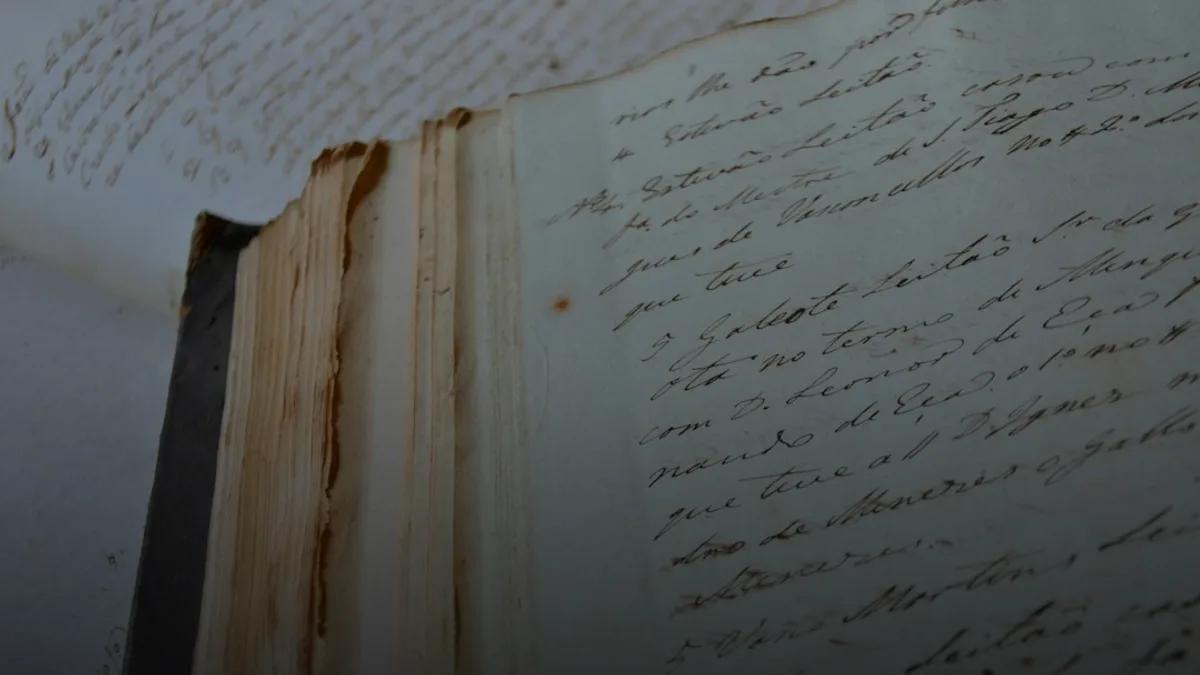
If you've spent 2026 watching LLMs autocomplete your pull requests, here's a story pointing somewhere else entirely. AI just helped read 1,009 pages of Kurt Gödel's handwriting that almost no living human could decode.
This is the AI Gödel notebooks proof story. On November 13, 2026, Alex Bellos reported in The Guardian that a Helsinki University team used AI to accelerate the decoding of Gödel's notebooks. The material is now said to contain hundreds of proved theorems that had sat unread for more than 80 years.
The story hit #1 on Hacker News within hours. 300+ points and 90+ comments in under seven. And almost as fast, the pushback started.
Here's the angle no competing same-day coverage is giving you. The technique underneath this is far more interesting than either the breathless headlines or the eye-rolling skeptics admit. Digitize illegible source material, transcribe it with a trained recognition model, reconstruct the meaning with a language model, then hand it to a human expert to verify. That pipeline generalizes well past one dead logician's shorthand, and that's the part worth your attention.
What is the Gödel notebooks AI decoding project
The Gödel notebooks AI decoding project is a Helsinki University effort to read and interpret 16 'workbooks' that Kurt Gödel wrote in the early 1940s. That's 1,009 pages of dense mathematics and logic, much of it recorded in Gabelsberger, a German shorthand that was already obsolete when Gödel used it. The effort has been led since 2017 by Finnish logician Jan von Plato, and in 2026 AI tools were brought in to speed up transcription and reconstruction.
Gödel matters here beyond trivia. His two incompleteness theorems, published in 1931, reshaped the foundations of mathematics and directly influenced Alan Turing's work on computation — the lineage that led to the digital age. After those results he published very little, yet left tens of thousands of pages of private notes. The workbooks are a slice of that hidden output, and until recently they were effectively locked.
Before AI, von Plato's progress was, in his words, 'painfully slow.' Roughly a page at a time. The bottleneck wasn't effort. Only a handful of people worldwide combine fluency in Gabelsberger shorthand with the mathematical-logic background needed to parse Gödel's idiosyncratic notation. As Hacker News commenter semolinapudding put it, that intersection is tiny, which is exactly why a decades-long manual effort stalled.
What's actually in Gödel's lost notebooks
The headline number is the hook: hundreds of proved theorems, previously unknown, inside 1,009 pages. That's genuinely remarkable for a figure whose published corpus after 1931 is thin.
But precision matters. These aren't 16 notebooks of nothing. The workbooks had already been partially hand-transcribed years earlier by logician John Dawson and his wife, who learned Gabelsberger specifically for the task. Dawson went on to write the Gödel biography Logical Dilemmas. Much of this material was also analyzed in Gödel's five-volume Collected Works. So the AI didn't crack open a hermetically sealed vault. It accelerated a reading effort that serious scholars had been chipping at for years.
The most disputed claim is that Gödel was "close to" proving the independence of the continuum hypothesis from the axiom of choice. That result was famously settled by Paul Cohen in 1963 using forcing, and Gödel himself had proved the other half (consistency) back in the 1930s. On Hacker News, user throwaway81523 flagged that this territory is already well documented in the Collected Works, so framing the notebooks as revealing Gödel on the verge of Cohen's result overstates things. And a note on what the notebooks did not contain: no sign of "Gödel's loophole," the long-rumored flaw he allegedly found in the US Constitution. The myth survives intact.
What AI found vs what it didn't
Strip the headline down and the honest ledger looks like this. AI did not discover mathematics. It recovered mathematics Gödel had already worked out and buried in a code almost no one alive can read.
| The headline framing | What actually happened |
|---|---|
| AI proved hundreds of brand-new theorems | AI transcribed and reconstructed theorems Gödel proved roughly 80 years ago |
| The notebooks were a sealed, untouched vault | They were partly hand-transcribed years earlier by logician John Dawson and his wife |
| Gödel was on the verge of Cohen's continuum-hypothesis result | Disputed; that territory is already documented in the five-volume Collected Works |
| One AI model read the shorthand end to end | A multi-stage OCR-plus-LLM pipeline with a human checking every output |
| The fabled 'Gödel loophole' in the US Constitution turned up | No sign of it — the myth survives intact |
Every row on the right is still a genuine win. Collapsing a page-a-week transcription grind into something a small team can finish is real research acceleration. It is just not the same thing as a machine inventing new proofs, and conflating the two is where the coverage went sideways.
How AI decoded Gabelsberger shorthand: the OCR + LLM pipeline
Here's the part no competing coverage actually explains, and it's the part engineers should care about. Decoding handwritten 1940s Gabelsberger is not a single model doing magic. It's a pipeline, and each stage has a distinct failure mode.
- Image capture and segmentation. High-resolution scans of each page, split into lines and glyph clusters. Gödel's hand is cramped and inconsistent, so segmentation errors cascade downstream.
- Handwritten shorthand recognition (the OCR layer). A model trained or fine-tuned on Gabelsberger converts strokes into candidate transcriptions. Standard OCR fails here. Gabelsberger is a stenographic system, not an alphabet, so a mark maps to phonetic and contextual shapes, not fixed letters.
- Language reconstruction. A large language model expands the shorthand into plain German, resolving ambiguity from context: the surrounding math, the grammar, and what Gödel was likely arguing. This is where a modern LLM earns its keep. It's probabilistic pattern completion over a corpus, which is exactly the shape of the problem.
- Mathematical interpretation. The reconstructed German is parsed into actual logical and mathematical statements: the theorem, its notation, and its proof structure.
- Human expert verification. Von Plato and collaborators check every output. A model can produce fluent, plausible, and wrong mathematics. The human is the gate.
That last step is the whole ballgame. The AI is a force multiplier on steps 2 through 4, turning a page-a-week grind into something tractable. It does not get to declare a theorem proved.
If you've built anything with LLMs in the loop, this architecture should look familiar. It's the same reason retrieval-augmented generation (RAG) systems pair a generative model with a grounding and verification layer instead of trusting raw generation. The model proposes. Something trustworthy disposes.
Two experiences hammered this home for me. Running this blog's 7-agent publishing pipeline across 261+ shipped posts, I can say plainly that deterministic gates placed before the LLM review step catch more errors than doubling the size of the review model. A cheap, rigid check in front of a fluent generator beats a bigger generator every time. Years earlier, building the Maps Galileo geospatial platform at Swiggy, I learned that boundary edge cases caused more production incidents than traffic spikes. The messy input at the edges, not the clean center, is where these pipelines break. Which is exactly why Gödel's cramped segmentation in step one and the human sign-off in step five matter more than the model in the middle.
Is the AI Gödel notebooks proof claim overhyped?
Short answer: the achievement is real, the framing is inflated. Both things are true.
The real-time expert pushback is the signal competing same-day coverage missed. Mathematical physicist and 2020 Nobel laureate Roger Penrose publicly rejected the "AI proved Gödel" framing in a clip that drew over 62,000 views within days. Penrose has spent decades arguing that human mathematical insight is not algorithmic, that Gödel's own theorems hint at something non-computational in understanding. So his objection isn't knee-jerk Luddism. It's a long-held position about what "proof" even means when a machine is involved.
The Hacker News thread landed in the same place from a different angle. The skeptics there weren't denying the transcription win. They were pushing back on the continuum-hypothesis spin and the implication that AI discovered new mathematics rather than helping read old mathematics. That distinction is everything. The AI did not prove new theorems. It helped recover theorems Gödel proved 80 years ago and wrote down in a code almost no one can read.
Strip the hype and the honest version is still impressive: a model collapsed a decades-long transcription bottleneck down to something a small team can finish in a reasonable window. That's a research-acceleration story, not a machine-genius story.
What AI-assisted math research looks like going forward
Reading old math is the easy frontier. Proving new math is the hard one, and that is where AI-assisted math research is actually heading.
The decoding pipeline is retrieval and reconstruction. The next step, the one mathematicians are genuinely watching, is machine-checked proof. Systems built on proof assistants like Lean let a model propose a proof and a formal kernel verify it line by line, so 'fluent but wrong' gets caught mechanically rather than by a tired human at 2am. That is a far stronger guarantee than anything in the Gödel transcription effort, and it is why the serious near-term bet is AI plus formal verification, not AI alone.
Von Plato's Helsinki project still has roughly 15 more workbooks to grind through at the new pace, so the Gödel story itself is nowhere near finished.
My read: the archival use case (read the unreadable) will produce the headlines first because it is low-risk. The proof-generation use case will produce the fights, because that is where 'did the machine actually do mathematics?' stops being a rhetorical question and starts being a benchmark.
Beyond coding: AI as a research collaborator, not autocomplete
Here's the thing nobody's saying clearly about this story. It's the most concrete public example yet of AI as a research collaborator outside software engineering. The Gödel case lands in the same week as Scott Aaronson's talk on how close AI is to contributing to P vs. NP, and a wave of mainstream science-media coverage on AI attacking historic math problems. This is becoming a beat, not a one-off.
The pattern is portable. Any discipline sitting on illegible, unstructured legacy material has a Gödel problem: knowledge that exists but can't be read at scale. Archival manuscripts. Lab notebooks. Handwritten clinical records. Untranscribed field recordings. The pipeline that cracked Gabelsberger (capture, transcribe, reconstruct, verify) maps cleanly onto all of them. This is a different use case than the code-generation and agentic AI demos that dominate the feed, and in some ways a more defensible one, because the human expert stays firmly in the verification seat.
For working engineers and researchers, the practical takeaway is specific. Stop thinking of the LLM as the answer-giver and start thinking of it as a high-recall, low-precision first pass that a deterministic check or a domain expert then filters. That's how I run AI agents in production AI systems, it's how I'd approach literature review or pattern-spotting in a legacy dataset, and it's exactly what von Plato did with Gödel. The same discipline shows up whether you're evaluating agents in production or engineering the context a large language model sees before it generates. The generation is the easy part. The grounding and verification are the engineering.
My prediction: within 18 months you'll see at least three more "AI unlocked a lost archive" stories, and the ones that hold up to scrutiny will all share this architecture. The ones that collapse under expert review will be the ones that skipped step five. Gödel, of all people, would have appreciated the irony. The system is only as trustworthy as the thing standing outside it, checking.
Photo by Afonso Azevedo Neves on Unsplash.
Continue reading
Jev vs Laya Head-to-Head: Typed-Output AI Models
A transparent first-look comparison of Jev and Laya, two task-specific AI models pitched against GPT and Llama. Here's what's verifiable, what isn't, and when a typed-output model beats a full LLM.
5 Open Source Tools That Replaced My $20/mo AI Stack
I replaced a $20/month pile of AI subscriptions with a self-hosted stack: Ollama for local models, LiteLLM for routing, Whisper for meeting notes, Langfuse for evals, and OpenHands for agentic coding.

Evaluate AI Agents in Production: 3-Level Framework
Most AI agent failures trace back to missing evals. Here's the 3-level framework — unit tests, LLM-as-judge, and online evaluation — that actually works in production.

Context Engineering for AI Agents: 4 Pillars Beyond Prompts
Context engineering — the systematic management of what an AI agent knows, remembers, and can access at each step — is the discipline replacing ad-hoc prompt engineering. Here are the four pillars that make or break production agents.

Kunal Ganglani (2026, November 14). AI Cracked Gödel's Notebooks: Hype vs Proof [2026]. Kunal Ganglani. Retrieved November 14, 2026, from https://www.kunalganglani.com/blog/ai-godel-notebooks-proof