Production AI
28 posts tagged #production-ai
28 posts on Production AI, 14 of them in the Production AI Engineering pillar, with 13 in AI Agent Architecture & Frameworks — most read: “AI Agent Cost Per Task: Token Budgets & Break-Even Math” and “Milvus vs Qdrant: Which Vector DB for Production RAG?”.
 Developer Tools
OpenAI Decisions API Tutorial: 3 Cost-Safe Patterns
A production-first OpenAI Decisions API tutorial: typed evals on POST /v1/decisions, predicate/choice/score, and three patterns to gate, batch, and escalate without cost blowups.
 Cloud and DevOps
vLLM Self-Hosted LLM Production Checklist: Auth + Quotas
A production-first checklist for self-hosting an OpenAI-compatible vLLM endpoint: auth, per-tenant quotas, streaming SSE, queueing, and redaction-safe logs.
 AI and Machine Learning
Mercury 2.5 770 tok/s Benchmark: The Production Playbook
Mercury 2.5 is clocking ~780 tok/s on Artificial Analysis. At that speed, decode stops being your bottleneck. Here’s what actually changes in production: batching, streaming UX, context packing, cost controls, and evals that don’t lie.
 AI and Machine Learning
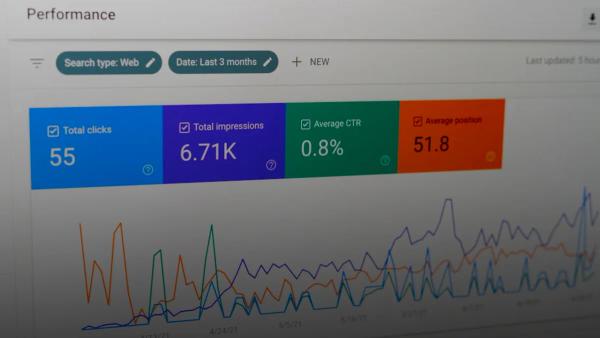
RAG Evaluation Metrics for Retrieval Quality: My Production Playbook
If your RAG app got worse after an embeddings or chunking change, grading answers won’t tell you why. Here’s a retrieval-first eval workflow: recall@k, MRR, citation accuracy, leakage tests, and a frozen offline corpus so regressions are real—not vibes.
 Cloud and DevOps
How to Build Vendor-Neutral LLM Observability
A practical blueprint for vendor-neutral LLM observability: an OpenTelemetry pipeline, an open trace schema, redaction boundaries, tail sampling, and cost controls that survive vendor swaps.
 AI and Machine Learning
Agent Evaluation Roadmap for Small Teams: 30 Min a Week
A pragmatic map of offline vs online vs HITL evals, what to measure beyond “response quality,” and the smallest program that actually prevents agent regressions.
 Cloud and DevOps
How to Pick LLM Application Observability Metrics
Token logs are table stakes. Here’s the minimum set of LLM application observability metrics for tools, RAG, caching, refusals, and privacy-safe logging that actually debugs production incidents.
 AI and Machine Learning
AI Engineering Evals: Regression Gates for Prompts and RAG
Stop letting prompt tweaks and model upgrades silently break production. Here’s a CI-style regression gate system for prompts, tool calling, and RAG with golden sets, schemas, shadow evals, and failure budgets.
 AI and Machine Learning
AI Agent Control Flow Patterns: Retries, HITL, Checkpoints
A practical catalog of ai agent control flow patterns that actually ship: bounded retries, idempotent tools, durable checkpoints, human approvals, and debuggable replays.
 AI and Machine Learning
OpenTelemetry for AI Agents: Tracing Schema and Spans
A vendor-neutral tracing schema for AI agents: model LLM calls, retrieval, tool runs, retries, and token cost as spans. Then dashboard latency, error tax, and cost per successful task.
 AI and Machine Learning
Agent Per-Task Cost Calculation: Retries, Tools, Caching
A spreadsheet-ready expected-cost model for agent workflows that includes retries, tool-call fanout, context growth, and caching. Plus hard budgets you can actually enforce.
 AI and Machine Learning
Gemma 4 26B on CPU: 5 tok/s Benchmark and Production Math
A $300 Xeon from 2013 runs Gemma 4 26B at 5 tok/s with no GPU. Here's the memory bandwidth math, quantization tradeoffs, and a production decision framework.
 AI and Machine Learning
RAG Context Window Limits: Why Bigger Is Not Better
Expanding your context window from 4K to 128K tokens doesn't fix RAG — it masks retrieval failures with coherent-sounding hallucinations. Here's the measurement framework to use instead.
 Developer Tools
AI Agent Cost Per Task: Token Budgets & Break-Even Math
Concrete per-task cost breakdown for Aider, Claude Code, and OpenHands — covering token overhead per PR, monthly burn at team scale, and the break-even formula for hosted APIs vs local models.
 AI and Machine Learning
Reduce LLM API Costs 60%: 6 Techniques
A technique-by-technique playbook with real cost math for cutting LLM API bills in production — covering semantic caching, prompt compression, model routing, batch APIs, and context tiering with 2026 pricing.
 AI and Machine Learning
Evaluate AI Agents in Production: 3-Level Framework
Most AI agent failures trace back to missing evals. Here's the 3-level framework — unit tests, LLM-as-judge, and online evaluation — that actually works in production.
 AI and Machine Learning
Weaviate vs Chroma in 2026: RAG Database Pick
I'd pick Weaviate for any production RAG system serving more than a handful of users, and Chroma for rapid local prototyping where zero-config setup matters more than scale. The fault line isn't features — it's operational maturity versus developer ergonomics.
 AI and Machine Learning
Fine-Tuning vs RAG vs Prompt Engineering: Decision Framework
Stop guessing which LLM technique to use. A 2026-updated decision matrix with real cost figures, concrete examples, and a clear flowchart for when fine-tuning beats RAG, when RAG beats both, and when prompt engineering alone is the right answer.
 AI and Machine Learning
AI Agent Latency Budgets: Performance Guide
Single-model TTFT benchmarks lie to agent builders. Here's the 6-tier latency budget framework for production AI agents in 2026, with real math for multi-hop tool calls.
 AI and Machine Learning
AI Agent Memory State Management Guide
Production AI agents fail silently without proper memory and state management. Here's the four-tier memory architecture, durable resumption patterns, and framework implementations in LangGraph, CrewAI, and raw Python.
 AI and Machine Learning
WhatsApp AI Agent: 5 Production Walls Beyond the Tutorial
The 30-minute WhatsApp AI agent tutorial gets 2,757 views/day. Here's what happens after the demo: rate limits, API costs, conversation state, ban risk, and the architecture that actually survives production.
 AI and Machine Learning
Context Engineering for AI Agents: 4 Pillars Beyond Prompts
Context engineering — the systematic management of what an AI agent knows, remembers, and can access at each step — is the discipline replacing ad-hoc prompt engineering. Here are the four pillars that make or break production agents.
 AI and Machine Learning
Generative AI vs Agentic AI vs AI Agents, Explained
Everyone's told to 'go agentic', but nobody agrees on what that means. A concrete architectural breakdown of generative AI, agentic AI and AI agents, with a production decision framework.
 AI and Machine Learning
Google ADK Tutorial: Build Your First AI Agent
Google's ADK Python 2.0 is GA with 20K+ GitHub stars — here's how to build, harden, and deploy your first AI agent beyond the happy path.
 AI and Machine Learning
Netflix Headroom: Cut AI Agent Costs 10x in Production
Netflix engineer Tejas Chopra open-sourced Headroom, a context optimization layer that cuts LLM inference costs by up to 10x. Here's how the architecture works and how any team can apply the same patterns.
 AI and Machine Learning
freeCodeCamp's AI Agent Course: What It Misses in Production
The freeCodeCamp AI agent course hit 52,000 views in under four days. Here are the 3 production gaps it leaves wide open — and how to close them before your agent burns $108/hour.
 AI and Machine Learning
Milvus vs Qdrant: Which Vector DB for Production RAG?
Qdrant wins for lean, fast RAG deployments where simplicity and filtering speed matter most; Milvus wins for large-scale enterprise workloads demanding billion-vector search and deep ecosystem integrations. Your stack size and ops maturity should make this an easy call.
 AI and Machine Learning
AutoGen vs CrewAI: Which Multi-Agent Framework Ships?
CrewAI wins for structured, role-based pipelines that need to reach production fast. AutoGen's conversational design still suits research-style multi-agent work, but Microsoft has archived it and no longer ships fixes. Here's the full breakdown.
Keep exploring
Close to this topic, not on this page.