Silicon-Anode Batteries: What Lenovo's StoreDot Bet Means for 20-Minute Laptop Charging [2026]
Lenovo invested in StoreDot's silicon-anode battery tech that could charge a laptop in under 20 minutes. Here's why this matters and when you'll actually see it.


Silicon-anode batteries are lithium-ion cells that replace the traditional graphite anode with silicon, a material capable of storing over 10 times more lithium ions per unit of mass. That leap unlocks higher energy density and dramatically faster charging. Lenovo's strategic investment in StoreDot signals that silicon-anode batteries are moving from lab promise to production reality, potentially bringing 20-minute laptop charging within reach and rewriting a battery architecture that hasn't fundamentally changed in three decades.
Silicon-anode batteries are about to blow that wide open. Lenovo just made a strategic investment in StoreDot, the Israeli startup whose silicon-dominant anode cells promise to charge devices not in hours, but in minutes. If this pans out, your next ThinkPad could go from dead to full in the time it takes to brew a pour-over.
Let me break down what silicon-anode batteries actually are, why the engineering is brutally hard, and what Lenovo's investment signals about the future of every device you carry.
What Is a Silicon-Anode Battery and Why Does It Matter?
Every lithium-ion battery has three main components: a cathode (positive side), an anode (negative side), and an electrolyte that shuttles lithium ions between them. In virtually every laptop, phone, and EV shipping today, that anode is made of graphite. Graphite works. It's stable, it's cheap, and it's been the industry default for over 30 years.

The problem? Graphite is approaching its theoretical ceiling. It can only absorb so many lithium ions per unit of mass, which puts a hard cap on both energy density and charging speed.
Silicon blows past that cap. A silicon anode can theoretically store over 10 times more lithium ions per unit of mass than graphite. That's not a marginal improvement. That's a generational leap. More ions absorbed per cycle means you can pack more energy into the same physical space, and you can move those ions faster during charging.
For laptop users, this is dead simple: a silicon-anode cell the same size as your current battery could hold significantly more charge and accept that charge at speeds that make current fast-charging look glacial.
The battery in your laptop hasn't fundamentally changed in three decades. Silicon anodes are the first technology with a realistic shot at rewriting that.
As a software engineer, I don't design battery cells. But I've spent 14+ years building software that runs on hardware constrained by them. Screen tech improves yearly. Processors shrink on schedule. But the battery is the bottleneck that gates everything else. It's the reason product teams make painful tradeoffs on thermals, performance, and form factor. I've watched this constraint shape product decisions for my entire career.
The Engineering Problem: Why Silicon Anodes Are So Hard to Build
If silicon is so obviously superior, why isn't it already in every battery? Because silicon has a brutal physical flaw: it swells.
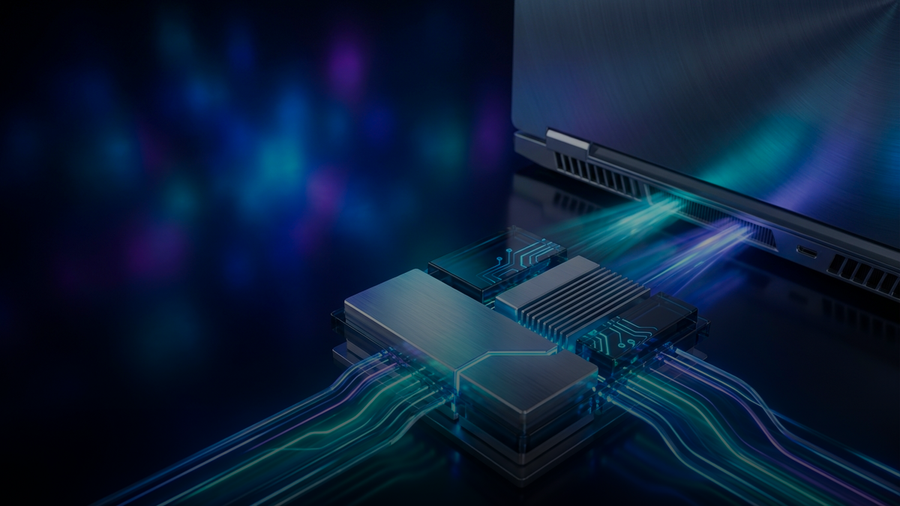
When lithium ions flood into a silicon anode during charging, the silicon expands by up to 300%. Then it contracts when you discharge. This expansion-contraction cycle physically destroys the anode. It cracks. It crumbles. The battery rapidly loses capacity. After a few hundred cycles, you'd have a battery that holds a fraction of its original charge. That's not a product. That's a liability.
This swelling problem is why silicon anodes have been "five years away" for the past twenty years. The science has always been promising. The engineering has always been punishing.
What's changed is that companies like StoreDot have developed silicon-dominant anode architectures that manage this expansion through nanostructured materials and proprietary electrode designs. Rather than using pure silicon, StoreDot's approach uses silicon-dominant composites that absorb the mechanical stress of repeated cycling without catastrophic degradation. Dr. Doron Myersdorf, CEO and co-founder of StoreDot, has stated that the company's goal is to charge an EV for 100 miles of range in just five minutes. That benchmark, branded as "100in5," has become the company's north star.
Here's the thing nobody's saying about StoreDot's approach: they didn't try to solve the pure-silicon problem. They engineered around it. That's the kind of pragmatic move that actually ships products. I've seen this pattern play out in software too. The teams that win aren't chasing theoretical perfection. They're finding the 80/20 solution that survives contact with reality.
Why Lenovo's Investment in StoreDot Is a Bigger Deal Than It Looks
Lenovo isn't a VC firm throwing money at moonshots. They're the world's largest PC manufacturer by volume. When Lenovo invests in a battery startup, it's not speculative. It's a supply chain signal.
StoreDot's investor list reads like an industrial who's who: Daimler (Mercedes-Benz), Volvo, Polestar, and now Lenovo. Each of these companies has a specific, near-term use case for extreme fast-charging cells. For the automotive partners, it's EVs. For Lenovo, it's laptops and consumer electronics.
This is where it gets interesting if you carry a laptop daily. The automotive industry has been driving silicon-anode R&D because EVs represent the highest-value market. But the engineering lessons transfer directly to smaller form factors. A cell chemistry that can charge a 100 kWh EV battery pack to meaningful range in five minutes can absolutely charge a 60 Wh laptop battery in under 20 minutes.
I've shipped enough features to know that when a manufacturer puts money into a component supplier, the next step is co-engineering. Lenovo isn't just buying equity. They're almost certainly working with StoreDot to adapt cell form factors, thermal profiles, and charging circuits for the ThinkPad and Legion product lines. This is how supply chain bets become product roadmap commitments, similar to how chip supply chains shape the entire hardware industry.
Here's StoreDot's own animation of how their 100in5 technology works:
Sam Jaffe, managing director at Cairn Energy Research Advisors, has noted that silicon-anode technology is one of the few battery innovations where commercial backing from multiple billion-dollar companies suggests the technology is past the lab stage. When Mercedes-Benz, Volvo, and Lenovo are all writing checks to the same company, you're not looking at vaporware anymore. You're looking at a credible production timeline.
What This Actually Means for Your Next Laptop
Let's get concrete.
Today's high-end laptops ship with 70-100 Wh batteries and support fast charging at around 100W via USB-C PD. That gets you from 0 to 50% in roughly 30-40 minutes, and a full charge takes 90 minutes to two hours. It's acceptable. It's not exciting.
With silicon-dominant anode cells, two things change at once. Energy density increases, meaning the same physical battery space holds more total charge. And more importantly for daily use, the charging rate jumps dramatically. StoreDot's demonstrated cell technology suggests charge times could drop to the 10-20 minute range for a full cycle.
What does that look like in practice?
- The charger stays in your bag. You plug in during a meeting, and you're full before the first agenda item wraps.
- Battery anxiety just... goes away. If a full charge takes 15 minutes, you stop treating battery life as a constraint entirely.
- Manufacturers can go thinner and lighter. Higher energy density means you shrink the battery while keeping runtime the same, or keep the size and deliver all-day battery life that actually means all day.
This one hits home for engineers running heavy workloads. I've been in situations where compiling a large codebase or running local ML models would drain my laptop in three hours flat. If that same machine could fully recharge during a lunch break, it changes how developers think about their hardware choices.
The Realistic Timeline: When Will You Actually Buy One?
I'm going to be honest here, because battery tech has more hype per square inch than almost any other field in hardware.
StoreDot has been targeting mass production of its silicon-dominant cells since 2024, initially focused on the EV market. The automotive validation cycle is long. Cells need to survive thousands of charge cycles, temperature extremes, and safety certifications that make consumer electronics testing look casual.
For laptops, the realistic timeline is 2027-2028 for the first commercial products. Lenovo needs to co-develop the thermal management systems (fast charging generates serious heat), redesign charging circuitry, and validate cycle life for a product consumers expect to last 3-5 years. That's real engineering work, not just dropping a new cell into an existing chassis.
The companies that tend to ship battery innovations successfully are the ones controlling both cell chemistry and system integration. Apple did this with their custom battery management silicon. Tesla did it with their tabless cell design. Lenovo's investment in StoreDot suggests the same vertically-integrated approach.
But let me be real about the first generation: it won't be perfect. Cycle life will probably trail current graphite cells initially. The charging infrastructure needs to catch up. USB-C PD at 240W is technically specced, but almost no chargers actually support it yet. And the cost premium will sting for early adopters.
The Boring Answer Is the Right One
Battery technology doesn't have viral moments. Nobody's dropping a silicon-anode cell onstage at CES to thunderous applause. It's incremental, methodical, deeply unsexy work.
But it's the single most impactful hardware improvement that could happen to laptops in the next five years. Not a faster chip. Not a better screen. A battery that charges in minutes and lasts all day. That's the upgrade that changes how you actually use the device, not just how you benchmark it.
Lenovo's bet on StoreDot tells you the largest PC maker on Earth believes silicon-anode batteries are production-ready within their planning horizon. Mercedes-Benz, Volvo, and Polestar are making the same bet for vehicles. When this many companies with this much at stake converge on one technology, the question stops being "will it happen" and becomes "who ships it first."
My prediction: by 2028, at least one major Lenovo product line ships with silicon-dominant anode batteries. Within two years of that, it's the new baseline every competitor has to match. The laptop battery as we know it — the one you're probably anxiously watching drain right now — is living on borrowed time.
Continue reading

How to Run Unsloth on AMD GPUs (ROCm) [2026 Guide]
A late‑2026 compatibility matrix plus known‑good commands for getting Unsloth LoRA fine‑tuning to actually converge on Radeon and MI GPUs with ROCm.
Intel Arc B‑Series Local LLM Benchmark [2026]: Arc Done Right
A reproducible Intel Arc B‑series local LLM benchmark harness (TTFT, tok/s, VRAM, power), plus a Linux/Windows compatibility matrix and Arc-friendly GGUF quants that won’t OOM at 8K context.

SQLite Production API Concurrency: WAL Mode Limits [2026]
SQLite in production is real. WAL mode buys you read/write concurrency and great latency. The trap is write contention, checkpoints, and backups. Here’s the decision guide, tuning defaults, and a runnable load test + restore drill.

12 Possible Endings for AI: Fact-Checking the “MIT” Meme [2026]
The viral “MIT Explains the 12 Possible Endings for AI” claim isn’t an MIT publication. Here’s a grounded 12-scenario taxonomy, signals to watch, and how to steer outcomes.

Kunal Ganglani (2026, March 17). Silicon-Anode Batteries: What Lenovo's StoreDot Bet Means for 20-Minute Laptop Charging [2026]. Kunal Ganglani. Retrieved September 27, 2026, from https://www.kunalganglani.com/blog/silicon-anode-batteries-lenovo-storedot-laptop-charging
Frequently Asked Questions
When will silicon-anode batteries actually be in Lenovo laptops?
No firm release date has been announced as part of this investment. Lenovo's investment in StoreDot signals confidence in the technology, but moving from a promising investment to a shipping consumer product typically takes several years of testing, manufacturing scale-up, and regulatory approval. Treat 2026-2028 as an optimistic window for early commercial availability.
How is a silicon-anode battery different from the battery in my laptop right now?
The battery in your current laptop almost certainly uses a graphite anode, the same basic design used since the early 1990s. Silicon can absorb more than ten times as many lithium ions as graphite by mass, which means a silicon-anode battery can store more energy in the same physical space and accept a charge much faster. The core challenge is that silicon swells dramatically during charging, which has made it difficult to build a battery that holds up over hundreds of charge cycles.
Is 20-minute laptop charging actually safe for the battery long-term?
Charging at very high speeds generates heat, which has historically degraded battery cells faster over time. StoreDot's silicon-dominant architecture is specifically engineered to manage the mechanical and thermal stress of rapid charging, but long-term real-world cycle life in consumer laptops has not yet been independently verified at scale. This is one of the key things to watch for in independent reviews once products actually ship.
Why has silicon battery technology taken so long if scientists have known about it for years?
Silicon's appeal has been known for decades, but the physics work against it: silicon expands by up to 300% when absorbing lithium ions and then contracts when the battery discharges, and this repeated swelling physically cracks and crumbles the anode after relatively few charge cycles. The engineering challenge is building nanostructured materials and electrode designs that survive hundreds of cycles without falling apart. That gap between promising lab science and a durable, manufacturable product is why silicon anodes have felt perpetually five years away.
Will silicon-anode batteries cost more than regular laptop batteries?
Almost certainly yes, at least initially. New battery chemistries that require advanced nanostructured materials and proprietary manufacturing processes are expensive to produce at first, and those costs tend to get passed on to consumers. As production scales up and manufacturing processes mature, costs typically come down, but early adopters of devices using this technology should expect to pay a premium.
Does this StoreDot technology also apply to electric vehicles, or just laptops?
StoreDot is developing silicon-dominant anode technology for both consumer electronics and electric vehicles. The company's stated EV goal is charging 100 miles of range in five minutes. The underlying chemistry is related, but the engineering requirements, battery pack sizes, and safety certifications differ significantly between a laptop battery and an EV battery pack, so the two product categories are likely to develop on somewhat different timelines.