AMD ROCm vs CUDA for Local AI [2026 Compared]
After months of running LLMs on AMD hardware, here's the brutally honest comparison of ROCm vs CUDA that no marketing page will give you — covering real performance, setup friction, and which GPUs actually work.


AMD ROCm vs CUDA for local AI is the comparison thousands of engineers are quietly researching as NVIDIA GPU prices hit record highs and AMD's open-source software stack finally matures. ROCm (Radeon Open Compute) is AMD's MIT-licensed answer to NVIDIA's proprietary CUDA toolkit, and after nearly a decade of development, it's reached the point where you can't just dismiss it anymore. But "reached the point" and "drop-in replacement" are very different things. This is the honest breakdown.
I've been running local LLM workloads on both AMD and NVIDIA hardware for months. Not quick benchmarks for a YouTube thumbnail. Actual daily use: inference with Ollama, fine-tuning with PyTorch, stress-testing vLLM until something breaks. What follows is everything I wish someone had told me before I bought an RX 7900 XTX specifically for local AI work.
ROCm works for local AI in 2026, but only on Linux with an RX 7900 XTX — everything else is friction disguised as support.
AMD ROCm vs CUDA for Local AI: The Real Comparison Nobody Makes
Most comparisons between ROCm and CUDA read like spec-sheet warfare. They list features side by side without telling you what actually matters when you sit down and try to run a 70B parameter model. So let me start with the thing that matters most: ROCm works for local AI inference in 2026. It works well. But the path to getting it working is paved with friction that CUDA users have never had to think about.
The key difference in rocm vs cuda is ecosystem maturity: CUDA is proprietary and the default backend for most frameworks, tutorials, and troubleshooting, while ROCm is AMD’s MIT-licensed CUDA alternative that now runs local AI well—but with friction. In 2026, ROCm “works,” mainly on Linux and best on an RX 7900 XTX; CUDA tends to “just work” across more GPUs and tools.

NVIDIA controls roughly 88% of the data center AI GPU market, according to Jon Peddie Research estimates from late 2024. That dominance isn't just about hardware. It's about a decade-long head start building the software ecosystem that makes GPU computing accessible. Every framework, every tutorial, every Stack Overflow answer defaults to CUDA. When you choose ROCm, you're swimming against that current.
The current has weakened, though. ROCm 7.2.4 (the stable release as of May 2026) is a fundamentally different product from what AMD shipped even two years ago. PyTorch 2.7.0 officially supports ROCm 6.3 as a first-class compute backend. Not "experimental." Not "community-maintained." First-class, right alongside CUDA 11.8, 12.6, and 12.8.
Here's the thing nobody's saying about ROCm: first-class PyTorch support doesn't mean first-class everything support. The gaps are where the pain lives.
Which AMD GPUs Actually Support ROCm? (The List Is Shorter Than You Think)
This is where most people's ROCm journey either begins or ends. AMD's marketing suggests broad GPU support. The reality is much narrower, and if you buy the wrong card, you'll waste days troubleshooting something that was never going to work properly.
Here's the consumer GPU reality for ROCm in 2026:
Officially supported RDNA 3 consumer cards:
- RX 7900 XTX (24 GB VRAM)
- RX 7900 XT (20 GB VRAM)
- RX 7900 GRE (16 GB VRAM)
Community-supported (works, but you're on your own):
- RX 7800 XT (16 GB VRAM)
- RX 7700 XT (12 GB VRAM)
- RX 7600 series (8 GB VRAM)
Professional cards with full support:
- AMD Instinct MI300X, MI250X, MI210 (data center)
- Radeon PRO W7900, W7800
The distinction between "officially supported" and "community-supported" is critical. Officially supported means AMD tests against that GPU, publishes compatibility matrices, and will actually help when something breaks. Community-supported means the hardware can work with ROCm via the HSA_OVERRIDE_GFX_VERSION environment variable hack, but you're trawling through community forums when things go sideways.
I've seen engineers buy an RX 7600 XT expecting the same ROCm experience as the 7900 XTX. It's not even close. The 8 GB of VRAM is the obvious limitation, but the deeper issue is that kernel-level optimizations aren't tuned for these lower-tier chips. You'll get it running. Performance per VRAM-GB will disappoint you.
If you're serious about local AI on AMD, the RX 7900 XTX is the card to buy. Period. It's the only consumer AMD GPU where the ROCm experience approaches "it just works."
ROCm vs CUDA: Head-to-Head Comparison Table
Here's the comparison that actually matters for someone building a local LLM rig in 2026:
| Dimension | AMD ROCm (7.2.4) | NVIDIA CUDA (12.8) |
|---|---|---|
| **License** | MIT (fully open-source) | Proprietary (closed-source) |
| **Top Consumer GPU** | RX 7900 XTX (24 GB) | RTX 4090 (24 GB) |
| **Street Price (mid-2026)** | ~$750–850 USD | ~$1,600–1,900 USD |
| **PyTorch Support** | First-class (ROCm 6.3 backend) | First-class (CUDA 12.8) |
| **Ollama Support** | Yes (HIP backend) | Yes (native CUDA) |
| **llama.cpp Support** | Yes (HIP/ROCm backend) | Yes (native CUDA) |
| **vLLM Support** | Yes (Linux only) | Yes (Linux + partial Windows) |
| **LM Studio Support** | Yes (ROCm builds available) | Yes (native) |
| **Windows AI Workflow** | Limited (HIP SDK, fewer frameworks) | Full support |
| **Linux AI Workflow** | Full support | Full support |
| **Inference Perf (relative)** | ~75–85% of CUDA equivalent | 100% (baseline) |
| **Setup Friction** | Moderate-to-high | Low |
| **Community/Ecosystem Size** | Growing, but 10x smaller | Massive, dominant |
| **CUDA Code Portability** | Via HIP + HIPIFY tool | N/A (native) |
| **Training Support** | PyTorch, JAX, Megatron-LM | Everything |
| **Quantization Support** | GPTQ, AWQ, GGUF via llama.cpp | GPTQ, AWQ, GGUF, bitsandbytes |
The price difference is the elephant in the room. You can buy two RX 7900 XTX cards for the price of a single RTX 4090. For inference-only workloads running quantized models, that math changes the entire conversation.
If you're evaluating that price-performance tradeoff for real workloads, the throughput numbers tell a more complete story — LLM Latency Benchmarks 2026: 6 Levers to Hit Sub-500ms TTFT breaks down TTFT and throughput data across 10+ models in a way that maps directly to hardware buying decisions.
What Actually Works With ROCm Right Now
Let me break down the major local AI tools and frameworks by how well they actually work on ROCm. Not benchmarks from a press release. Months of daily driving.
Ollama
Ollama's ROCm support is solid. After installing ROCm and the appropriate Ollama build, ollama run llama3 works on an RX 7900 XTX about as smoothly as it does on an RTX 4090. The initial setup takes an extra 15–20 minutes compared to CUDA (installing ROCm drivers, verifying rocminfo output, making sure your user is in the render and video groups), but once it's running, it stays running. I've been using Ollama daily on AMD hardware and the experience is genuinely good.
Here's a video from TechteamGB showing the setup process on a consumer AMD GPU:
llama.cpp
llama.cpp has had HIP/ROCm support for over a year now, and it's one of the best-optimized inference engines for AMD GPUs. If you're running quantized GGUF models (which you should be for local inference), llama.cpp on ROCm delivers roughly 75–85% of the tokens-per-second you'd get on a comparable NVIDIA card. For a Llama 3 8B Q4_K_M model, expect around 80–100 tok/s on an RX 7900 XTX versus 100–120 tok/s on an RTX 4090. The gap narrows on larger models where VRAM bandwidth becomes the bottleneck rather than compute optimization.
The quantization format you choose matters as much as the inference engine itself — GGUF vs GPTQ vs EXL2: LLM Quantization Compared [2026] breaks down exactly how each format behaves on hardware like the RX 7900 XTX, including VRAM trade-offs that directly affect which models you can run.
PyTorch
The PyTorch Foundation officially supports ROCm 6.3, making installation a one-liner: pip3 install torch torchvision torchaudio with the ROCm index URL. In my testing, PyTorch training workloads run at approximately 70–80% of CUDA performance on equivalent hardware. The gap is real, but it's not the 2–3x penalty it was in 2023. For fine-tuning smaller models on a single GPU, ROCm gets the job done.
vLLM and SGLang
Both vLLM and SGLang officially support ROCm for inference serving, including distributed inference via AMD's MoRI (Multi-node ROCm Inference) framework. If you're building a multi-GPU inference setup, this matters. The caveat: Linux-only. If you're trying to run vLLM on Windows with an AMD GPU, don't. Just don't.
Where Things Break
The tools that still cause headaches on ROCm: bitsandbytes (the popular quantization library) has inconsistent AMD support. Some Hugging Face Transformers examples assume CUDA and fail silently on ROCm. Anything using custom CUDA kernels won't work without manual porting via HIPIFY, and there's a surprising amount of cutting-edge ML research code in that category. And if you're doing anything with Flash Attention, the ROCm-compatible fork (CK Flash Attention via Composable Kernel) works but requires separate installation steps that aren't documented in most tutorials.
I've shipped enough features to know that undocumented installation steps are where half your afternoon disappears.
The Windows vs Linux Gap Nobody Warns You About
This is the single most important thing nobody tells you about ROCm for local AI: if you're on Windows, ROCm is a second-class citizen. The full AI workflow — training, fine-tuning, inference with vLLM/SGLang, PyTorch with ROCm backend — is officially supported on Linux only.
Windows gets the HIP SDK, which provides basic GPU compute capabilities. You can run Ollama and LM Studio on Windows with AMD GPUs. But the moment you need PyTorch with ROCm, or vLLM serving, or any serious ML framework, you need Linux. Full stop.
This isn't a minor inconvenience. Most local AI enthusiasts are running Windows desktops. They see "ROCm supports RX 7900 XTX" and assume that means full support on their existing OS. It doesn't. I've watched this play out in forums dozens of times. Someone buys the card, installs Ollama on Windows, gets excited, then hits a wall the second they try to do anything beyond basic inference.
My recommendation: if you're buying an AMD GPU for local AI and you're currently on Windows, budget an extra afternoon to set up a dual-boot Ubuntu 22.04 or 24.04 partition. You can try WSL2, but WSL2's ROCm support adds yet another layer of potential breakage. The cleanest path is a native Linux install.
Compare this to NVIDIA, where CUDA works on Windows and Linux with near-parity. You install the drivers, install CUDA toolkit, and everything from PyTorch to TensorFlow to vLLM works on either OS. That frictionless experience is worth real money. AMD still hasn't matched it.
Where CUDA Still Wins (And It's Not Just Performance)
I want to be fair here. After shipping production AI systems and testing both ecosystems extensively, here's where CUDA maintains a genuine advantage:
Ecosystem depth. Every ML paper published with code assumes CUDA. Every tutorial, every course, every blog post defaults to NVIDIA. When something goes wrong with your CUDA setup, there are millions of Stack Overflow answers. When something goes wrong with ROCm, you're reading GitHub issues from 2023 hoping someone with the same GPU and kernel version found a fix. I've been that person at 11 PM scrolling through closed issues. It's not fun.
Training performance. For training workloads (not inference), CUDA is still meaningfully faster. NVIDIA's Tensor Cores and the maturity of cuDNN give a 20–30% performance advantage over ROCm's equivalent rocBLAS/MIOpen stack on comparable hardware. If you're fine-tuning models regularly, this gap compounds fast.
Tooling polish. nvidia-smi is battle-tested and universally understood. ROCm's rocm-smi works, but it's rougher around the edges. Profiling tools like Nsight are more mature than ROCm's rocprof. Not dealbreakers individually, but daily friction points that add up over weeks.
Flash Attention and custom kernels. The cutting edge of ML optimization runs on custom CUDA kernels. Flash Attention 2, PagedAttention (used in vLLM), and various quantization kernels are written in CUDA first and ported to ROCm second. Sometimes months later. Sometimes never. If you need the absolute latest optimization, CUDA gets it first. That's just the reality.
The honest truth: if money is no object and you want the path of least resistance for local AI, buy an RTX 4090. The ecosystem advantage is real and it saves you hours of troubleshooting over the life of the card.
But money is an object for most of us. And that's where the calculus shifts.
The Open-Source Argument: Why ROCm's MIT License Actually Matters
ROCm is fully open-source under the MIT License. CUDA is proprietary and closed-source. Most comparisons wave this away like it's an ideological concern. It's not. It has practical consequences I've run into firsthand.
First, vendor lock-in. Every CUDA kernel you write, every workflow you build around NVIDIA's proprietary stack, ties you to NVIDIA's pricing decisions. When the RTX 5090 launched at even higher prices, CUDA users had exactly one option: pay up. ROCm users have an alternative path, even if it's rougher.
Second, transparency. When ROCm has a bug, you can read the source code, understand the issue, and sometimes fix it yourself. When CUDA has a bug, you file a ticket with NVIDIA and wait. Having worked with both AI agents and low-level GPU tooling, I can tell you that the ability to read the actual driver source has saved me real debugging time. More than once I've traced an issue through the ROCm stack that would have been a complete black box on CUDA.
Third, portability via HIP. AMD's HIP (Heterogeneous Interface for Portability) programming model is syntactically similar to CUDA. The HIPIFY tool can automatically convert most CUDA code to HIP. The ROCm ecosystem benefits from every CUDA library that gets ported, and the porting effort is often surprisingly small. The AMD Engineering Team has invested heavily in making HIP a genuine portability layer, not just a marketing bullet point.
This matters most for the long game. If AMD's RDNA 4 GPUs (expected in the RX 8000 series) deliver on their AI acceleration promises, having an open-source software stack means the community can optimize for new hardware without waiting for AMD's official support timeline. That's a structural advantage CUDA can't match.
Can You Use ROCm for AI Training, Not Just Inference?
Yes, but with caveats. ROCm supports full training workflows via PyTorch, JAX, and even Megatron-LM through AMD's Primus framework. The AMD ROCm documentation covers single-GPU and multi-GPU fine-tuning in detail.
In practice, here's what training on ROCm actually looks like on consumer hardware:
- LoRA/QLoRA fine-tuning of 7B–13B models on an RX 7900 XTX works. Expect training to take 15–25% longer than on an RTX 4090 for equivalent configurations. The 24 GB of VRAM is the same on both cards, so model-size constraints are identical.
- Full fine-tuning of models larger than 13B on a single consumer GPU is impractical on both ROCm and CUDA. You need multi-GPU setups or quantized training approaches regardless of your vendor.
- Mixed-precision training (FP16/BF16) works on RDNA 3, though NVIDIA's Tensor Cores still have an architectural advantage for matrix multiplication throughput.
I've personally run LoRA fine-tuning jobs on both an RX 7900 XTX and an RTX 4090 using the same dataset and hyperparameters. The AMD card completed the job about 20% slower. For a hobbyist or researcher doing occasional fine-tuning, that's perfectly acceptable. For someone running training jobs daily, those hours add up.
If you want a detailed walkthrough of the fine-tuning process itself, Fine-Tune Open-Source LLMs: LoRA, QLoRA, Gemma 4 [2026] covers the full Unsloth + Gemma 4 setup, including GPU requirements and hyperparameter defaults that apply equally whether you're on ROCm or CUDA.
The bigger issue isn't raw performance. It's that when training fails on ROCm (and it will, because training always fails at some point), debugging is harder. Error messages are less informative. Fewer people have encountered your exact issue. The tooling for inspecting GPU memory states is less mature. I've spent entire evenings chasing a cryptic HIP runtime error that turned out to be a known issue with a one-line workaround buried in a GitHub comment from six months ago. On CUDA, that same issue would have had a dozen Stack Overflow answers.
The Setup Experience: A Step-by-Step Reality Check
Here's what actually happens when you set up ROCm for local LLM inference, with the friction points called out:
- Install Linux. Ubuntu 22.04 LTS or 24.04 LTS are your safest bets. Fedora and RHEL work too, but Ubuntu has the most community documentation. If you're coming from Windows, this is already a barrier.
- Install ROCm. AMD provides an
amdgpu-installscript that handles the kernel driver and userspace components. This usually works cleanly on supported Ubuntu versions. When it doesn't — typically due to kernel version mismatches — you're in for an hour of troubleshooting. I hit this exact issue on a fresh 24.04 install last month. Rolled back the kernel, everything worked. But you shouldn't have to know that. - Verify your GPU is detected. Run
rocminfoandrocm-smi. If your GPU shows up with the correct GFX version (gfx1100 for RX 7900 XTX), you're golden. If it shows as "unknown" or doesn't appear, you've got driver issues to sort out. - Add your user to the right groups. Your user needs to be in
renderandvideogroups. Miss this step and everything fails with unhelpful permission errors. This is one of those things where the boring answer is actually the right one: just run theusermodcommands before you do anything else. - Install your framework. For Ollama, download the ROCm-compatible build. For PyTorch, use the ROCm index URL. For llama.cpp, build from source with
-DGGML_HIP=ON. - Set environment variables (if needed). For community-supported GPUs, you'll need
HSA_OVERRIDE_GFX_VERSION=11.0.0. For officially supported cards, this shouldn't be necessary.
Compare this to the CUDA experience: install NVIDIA drivers (which Ubuntu offers in the "Additional Drivers" GUI), install CUDA toolkit via apt, done. The ROCm setup isn't terrible, but it demands more Linux comfort and more willingness to troubleshoot when something doesn't click.
Should You Buy AMD for Local AI in 2026?
After months of daily use, here's my framework for deciding:
Buy the RX 7900 XTX if:
- You're primarily doing inference (running models, not training them)
- You're comfortable with Linux or willing to learn
- Budget matters. The $800+ savings over an RTX 4090 is real money
- You value open-source software and want to avoid vendor lock-in
- You're running Ollama, llama.cpp, or LM Studio as your primary tools
- You want 24 GB of VRAM without paying NVIDIA's premium
Buy the RTX 4090 if:
- You're doing regular training or fine-tuning
- You need Windows support without dual-booting
- You want the largest possible ecosystem and community support
- You use frameworks or libraries with CUDA-only features (bitsandbytes, Flash Attention latest)
- Your time is worth more than the price difference
- You plan to use NVIDIA-specific tools like TensorRT
Consider [Apple Silicon](/blog/apple-silicon-vs-nvidia-for-ai) if:
- You want the lowest-friction local AI experience on a laptop
- You value unified memory over raw GPU throughput
- You're already in the Apple ecosystem
The ROCm story in 2026 is genuinely encouraging. PyTorch support is first-class. Ollama and llama.cpp work well. The price-to-VRAM ratio is unbeatable. But the ecosystem gap is real, the Windows situation is a dealbreaker for many, and the setup friction is meaningfully higher than CUDA.
Two years ago, if you'd asked me whether ROCm was ready for local AI, I'd have said "not really." Today the answer is "yes, for most inference workloads, on Linux, with the right GPU." That's a massive improvement. But those qualifiers — "most," "Linux," "right GPU" — are exactly the things that don't show up on the marketing page.
What Comes Next for ROCm
AMD's trajectory is clear: ROCm is getting better every release, and the 7.13.0 technology preview suggests aggressive investment in AI-specific optimizations. The upcoming RDNA 4 architecture is rumored to significantly improve AI compute density, which would make the ROCm value proposition even stronger.
The more interesting shift is cultural. As LLM costs drive more teams toward local inference, and as open-source models keep closing the gap with proprietary ones, demand for non-NVIDIA GPU computing is only growing. Every developer who successfully runs a local LLM on AMD hardware and shares their experience makes the next person's journey a little less painful.
My prediction: by the time RDNA 4 consumer cards ship, ROCm will be where CUDA was around 2019. Fully functional for the 80% case, with rough edges on the remaining 20%. For a platform that's MIT-licensed, community-driven, and backed by a company with genuine silicon-design talent, that's a position NVIDIA should take seriously.
The era of "CUDA or nothing" for local AI is over. What we have now is "CUDA or a bit more work." For a lot of us, that's enough.
Continue reading
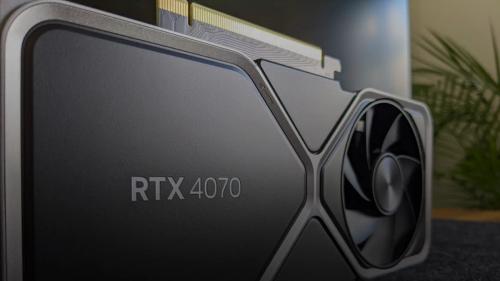
RTX 4060 Ti vs RTX 4070 for Local LLM Inference in 2026
I'd pick the RTX 4060 Ti if you're running sub-13B models solo on a tight budget, and the RTX 4070 if VRAM headroom and generation speed actually matter to your workflow. The $150 price gap is real, but so is the performance cliff you hit at 16GB models.

Text Generation WebUI vs Ollama 2026: Which Local LLM Tool Wins?
Ollama wins for developers who want a fast, CLI-first runtime with clean API integration; Text Generation WebUI wins for researchers and power users who need deep model control and a browser-based interface. Your choice hinges on whether you optimize for simplicity or configurability.

Ollama vs llama.cpp 2026: Which Local LLM Tool Actually Wins?
Ollama wins for developers who want a fast, polished setup with REST APIs and model management. llama.cpp wins for power users squeezing every last token of performance from their hardware.

Ollama vs Llamafile 2026: Which Local LLM Tool Actually Wins?
Ollama wins for developers who want a persistent API server with a rich model library and ecosystem integrations. Llamafile wins for anyone who needs zero-install portability — one executable, any machine, no setup.

Kunal Ganglani (2026, March 16). AMD ROCm vs CUDA for Local AI [2026 Compared]. Kunal Ganglani. Retrieved September 14, 2026, from https://www.kunalganglani.com/blog/amd-rocm-vs-cuda-local-ai-open-source-guide
Frequently Asked Questions
Is ROCm as fast as CUDA for running local LLMs?
Not quite. On equivalent hardware (RX 7900 XTX vs RTX 4090, both with 24 GB VRAM), ROCm delivers roughly 75–85% of CUDA's inference performance in tools like llama.cpp and Ollama. The gap is smaller for larger, memory-bound models and wider for compute-bound workloads. For most local inference use cases, the difference isn't noticeable in interactive use.
Does ROCm work on Windows for AI workloads?
Partially. Windows gets AMD's HIP SDK, which enables basic GPU compute and supports tools like Ollama and LM Studio. However, the full AI stack — PyTorch with ROCm, vLLM, SGLang, and most ML training frameworks — only works on Linux. If you need comprehensive AI support, plan to run Ubuntu.
Which AMD GPU is best for local AI with ROCm?
The RX 7900 XTX is the clear winner for consumer local AI. It's the only AMD consumer card with full official ROCm support, 24 GB of VRAM (matching the RTX 4090), and optimized kernel support. Lower-tier cards like the RX 7800 XT work via community workarounds but offer a noticeably worse experience.
Can I convert my CUDA code to run on AMD GPUs?
Yes, AMD provides a tool called HIPIFY that automatically converts most CUDA code to HIP (Heterogeneous Interface for Portability). HIP is syntactically very similar to CUDA, so many projects port with minimal manual changes. However, code using custom CUDA kernels or NVIDIA-specific libraries like cuDNN may require more significant rework.
Is ROCm truly open-source?
Yes. ROCm is licensed under the MIT License, which is one of the most permissive open-source licenses available. The entire stack — from the kernel driver (ROCk) to the runtime (ROCr) to the compiler (HIPCC) to the math libraries (rocBLAS) — is publicly available on GitHub. This contrasts with NVIDIA's CUDA, which is proprietary and closed-source.