A Phone Company Showed Off a Dancing Robot at MWC. That's Not the Weird Part.
Honor debuted a humanoid robot at MWC 2025 that danced on stage, then virtually erased it from the internet. The disappearing act tells us more about the tech industry than any spec sheet.


When a phone company puts a humanoid robot on stage and then goes silent, the demo wasn't the product — the photo of the demo was.
A Phone Company Showed Off a Dancing Robot at MWC. That's Not the Weird Part.
A trade show robot demo is a choreographed humanoid performance staged to signal innovation capacity rather than ship a product. Honor's dancing robot at MWC 2025 is the latest example: it performed on stage in Barcelona, drew a crowd, and then virtually vanished from Honor's own channels. No press release, no roadmap, no named project lead. That silence, not the robot itself, is the story worth paying attention to.
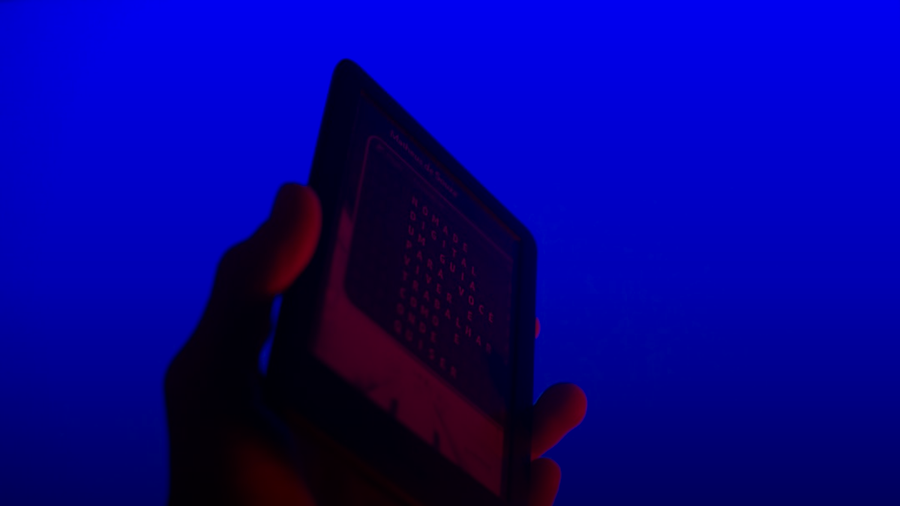
That's the weird part.
Not the robot. Not the dancing. The fact that a major product showcase at the world's biggest mobile trade show — an event running since 1987 — left barely a trace in official channels or mainstream tech coverage. Go ahead, search for details on Honor's robot program. You'll find a few scattered attendee videos and almost nothing from Honor itself.
I've been in this industry long enough to know that when a company spends millions on a trade show spectacle and then goes quiet, that silence is the story.
The Demo That Vanished
Here's what we know. Honor brought a humanoid robot to their MWC 2025 booth. It performed choreographed dance moves. It was clearly designed to draw foot traffic and generate social media buzz. By every measure, it should have been a headline.

Instead? No official Honor press release about the robot. No product page, no roadmap, no named project lead. The coverage that exists comes almost entirely from attendee-shot videos and a handful of tech outlets that happened to walk by the booth. Honor's own marketing machine — otherwise prolific about their smartphones — treated this dancing robot like it never happened.
Here's the video that does exist, captured at the event:
Ben Wood, Chief Analyst at CCS Insight and one of the most respected voices covering the mobile industry, has noted repeatedly that MWC has become a stage for companies to project technological ambition far beyond their core business. The robot demos, he's argued, are more about signaling innovation capacity to investors and partners than about shipping actual products.
That framing makes Honor's vanishing act click. The demo wasn't for you and me. It was for a very specific audience in very specific meetings happening in the back rooms of Fira Barcelona.
Phone Companies Have a Robot Problem
Honor isn't the first phone maker to flirt with robotics and then go quiet. This is becoming a pattern.

Xiaomi unveiled CyberOne in August 2022. CEO Lei Jun personally introduced the humanoid robot on stage. It walked, it gestured, it recognized emotions (allegedly). The tech press covered it wall to wall. And then... nothing. CyberOne hasn't shipped. No consumer product. No timeline. It was a concept that served its purpose under the stage lights and retreated to whatever lab it came from.
Samsung has been showing variations of Ballie — their rolling home robot — since CES 2020. Five years of demos. The company finally announced pricing around $3,000 at CES 2025, but as of mid-2025, evidence of widespread consumer availability is thin. Five years of trade show appearances for a product most people still can't buy.
As I wrote about when MWC's robot obsession distracted from what actually mattered, the pattern keeps repeating: demo, headlines, silence. The reason is simple. These robots aren't products. They're props.
I dug into the same pattern from another angle in MWC's Robot Obsession Distracted You From What Actually Matters, especially how the robot headlines tend to crowd out the more consequential announcements happening in the background.
The Trade Show Industrial Complex
After shipping software for over 14 years, I've developed a nose for what's real and what's theater. I've attended enough tech conferences and sat through enough product launches to spot a demo that exists purely as a conversation starter.
The tell is always the same: no spec sheet. No SDK. No developer program. No integration story. No shipping date. Just vibes and choreography.
The smartphone market has matured to the point where real differentiation is brutally hard. Global shipments peaked at roughly 1.5 billion units around 2017 and have since declined to approximately 1.17-1.2 billion annually. The market isn't growing. Every flagship looks like every other flagship. Camera improvements are incremental. Chip upgrades are predictable.
So what do you do when your core product is plateauing? You put a dancing robot on stage.
It's the same instinct that drives car companies to show concept cars they'll never build. The robot says: "We're not just a phone company. We're a technology company. We think about the future." That message isn't for consumers. It's for investors, carrier partners, and the analysts writing reports that shape brand perception in markets like Europe and Southeast Asia where Honor is aggressively expanding.
The demo isn't the point. The photo of the demo is the point.
The Real Robotics Race Looks Nothing Like This
While phone companies use robots as trade show decorations, the actual robotics industry is moving fast. And the serious players look nothing like Honor or Xiaomi.
Figure AI raised $675 million in a Series B round in early 2024, backed by Jeff Bezos, Microsoft, NVIDIA, and OpenAI. Their Figure 02 humanoid is being tested in BMW manufacturing facilities. Boston Dynamics keeps iterating on Atlas. Tesla's Optimus program, whatever you think of the timelines Musk promises, has a dedicated team and a clear manufacturing thesis.
The gap between these companies and a phone maker's MWC demo is the gap between a research program and a photo op. Figure AI has published detailed technical papers. Boston Dynamics has decades of locomotion research. Robotics is their core mission, not a side quest to juice a keynote.
Dimitri Slavnov, a robotics researcher at ETH Zurich, put it bluntly in a 2024 interview with IEEE Spectrum: the distance between a robot performing choreographed movements and one navigating an unstructured environment autonomously is "orders of magnitude" in engineering complexity. Dancing is easy. Doing useful work is the hard part.
That's why the phone companies go quiet after the demo. Once the trade show lights come down, there's no roadmap because there was never supposed to be one.
The Gap Between Show and Ship
Honor's disappearing robot isn't a scandal. It's a symptom.
There's a growing gap in tech between what companies show and what they ship. I've watched this dynamic accelerate over the past few years, especially as AI hype has given every company permission to demo things that are years (or decades) from being real. It's the same pattern I explored when looking at how AI coding agents are reshaping what engineers actually do. The demo always looks more impressive than the production reality.
The Ameca robot that stole the show at MWC 2024 was at least honest about what it was: a demonstration platform from Engineered Arts, a company whose entire business is building expressive robots. They weren't pretending it would ship as a consumer product next quarter. The phone companies doing robot demos don't extend that same honesty.
What bothers me isn't that Honor showed a robot. It's the erasure afterward. If you're going to put something on a stage at the world's biggest mobile trade show, own it. Tell us what it is. Tell us why you built it. Tell us it's a research project, a concept, a moonshot. Anything. The silence tells me the robot served exactly one purpose: generating buzz in the halls of Fira Barcelona for exactly three days.
And honestly? It probably worked. The meetings that mattered probably happened. The right analysts probably took note. The brand perception needle probably moved a fraction of a degree.
But the next time you see a phone company put a humanoid robot on stage, ignore the robot. Watch what happens in the weeks after. If the company goes silent, you've just witnessed a magic trick. The robot was misdirection. The real product was always the phone in your pocket — and the quarterly earnings report that depends on you buying the next one.
Photo by Ian Talmacs on Unsplash.
Continue reading

MWC's Robot Obsession Distracted You From What Actually Matters
Everyone shared the dancing robot videos from MWC 2024. Almost nobody talked about the on-device AI demos that will actually change how you use your phone.
Text-to-CAD AI Tools: 2026 Guide + Free Options
How text-to-CAD AI actually works, which tools output editable STEP files versus pretty meshes, how to write prompts that work, and a step-by-step first model.
CLI-Anything: Make Any Software Agent-Native [2026]
CLI-Anything wraps any app in a thin command-line shim so AI agents can drive it like grep or git. Here's how it works, why CLIs beat prompt DSLs, and where it fits next to MCP.
Openrig: Build a 3-Agent Claude Code + Codex Network
Openrig is the build-your-own pattern for wiring Claude Code, OpenAI's Codex CLI, and a lightweight Pi node into one coordinated agent network. Here's the architecture, the setup, the handoff protocol, and what it actually costs.

Kunal Ganglani (2026, March 4). A Phone Company Showed Off a Dancing Robot at MWC. That's Not the Weird Part.. Kunal Ganglani. Retrieved October 19, 2026, from https://www.kunalganglani.com/blog/honor-dancing-robot-mwc-phone-companies-building-robots
Frequently Asked Questions
What humanoid robot was shown at MWC 2025?
Honor showcased a humanoid robot at MWC 2025 in Barcelona that performed choreographed dance moves at their booth to attract attention and generate social media buzz. Despite the spectacle, Honor released no official press statement, product page, or technical details about the robot — and their own marketing treated the demo as if it never happened.
What robots were at MWC 2025?
The most notable robot at MWC 2025 was a humanoid dancing robot debuted by Honor, the smartphone brand Huawei divested in 2020. The demo drew foot traffic and attendee-shot video but was never followed up with any official announcement, fitting a broader pattern of phone companies using robots as trade show props rather than real product launches.
What robotics were shown at MWC 2025?
MWC 2025 featured humanoid robotics demonstrations, most visibly Honor's dancing robot on the trade show floor in Barcelona. Analysts like Ben Wood of CCS Insight have argued that these robotics showcases are primarily designed to signal innovation capacity to investors and partners in private meetings, not to announce products heading to market.
Why do tech companies show robots at MWC if they never release them?
Tech companies use robot demos at MWC to project the image of a broad technology innovator rather than just a hardware maker — a message aimed at investors, carrier partners, and analysts, not consumers. As the smartphone market has plateaued from roughly 1.5 billion annual shipments in 2017 to about 1.2 billion today, companies like Honor use spectacle to signal ambition when core products offer diminishing differentiation.
How can you tell if a robot demo at a trade show is a real product?
Real products come with spec sheets, SDKs, developer programs, a named project lead, and a clear shipping timeline — none of which Honor provided after its MWC 2025 robot demo. When a flashy demo has none of those elements, it was almost certainly built for the stage rather than for actual customers, a pattern repeated by Xiaomi's CyberOne in 2022 and Samsung's Ballie since 2020.
Is the Honor robot from MWC 2025 a real product you can buy?
No — Honor's MWC 2025 humanoid robot is not an announced consumer product and has no published roadmap, pricing, or availability information. Honor itself went silent after the demo, with coverage existing almost entirely from attendee-shot videos rather than any official company communications, strongly suggesting the robot was a strategic prop rather than a product in development.