The Incredible Shrinking Flagship: Is Peak Big Phone Finally Over?
A 5.9-inch screen is now considered 'compact.' The iPhone Mini is dead, the Asus Zenfone clings to life, and every year big phones get bigger. Is the small flagship a real movement or a vocal minority?


The Incredible Shrinking Flagship: Is Peak Big Phone Finally Over?
A 5.9-inch phone is now considered small. A decade ago, that same screen size would've gotten you laughed out of a meeting. "That's not a phone, that's a TV remote." Today, it's the calling card of the Asus Zenfone 10, one of the last compact flagships still breathing in the Android world.

Meanwhile, Apple killed the iPhone Mini after two generations of underwhelming sales. Samsung's idea of "small" is a 6.2-inch Galaxy S24. Our phones got enormous, and almost nobody in the industry seems interested in reversing course.
I've been thinking about this for a while. Not as a nostalgia trip for flip phones, but as someone who actually uses a phone one-handed on the TTC every morning. The compact flagship should be a thriving category. Instead, it's on life support.
The Last Compact Standing
The Asus Zenfone 10 is a genuinely remarkable device. Snapdragon 8 Gen 2, the same top-tier processor you'd find in phones twice its size. Headphone jack. Wireless charging. IP68 rating. WIRED praised it for performance and battery life, and the reviewer noted something telling: the moment it launched, rumors immediately swirled that it would be the last Zenfone ever made.

Asus denied it. A spokesperson told WIRED directly that the Zenfone 10 wouldn't be the last of its kind. But the fact that those rumors were so instantly believable tells you everything. When people hear "small flagship phone," their first instinct is to assume it's being discontinued. That's how deep the pessimism runs.
And the pessimism isn't unfounded. The Zenfone 10 launched at $700. Competitive price. Strong reviews. But walk into any carrier store in North America and try to find one on display. You can't. Asus doesn't even support Verizon. The phone exists in a distribution vacuum: beloved by tech reviewers, invisible to everyone else.
This is the core problem. It's not that people don't want compact flagships. It's that the entire ecosystem, carriers, retail, marketing budgets, is built around big phones. A great product with no distribution is just a really nice paperweight.
Why Apple Killed the Mini (And What It Really Means)
Apple is the most instructive case here, because Apple actually tried. The iPhone 12 Mini and 13 Mini were legitimate compact flagships. Same processor as the Pro models. Same build quality. 5.4 inches. Real small.

They didn't sell.
Consumer intelligence firms estimated the iPhone 12 Mini accounted for roughly 5% of the iPhone 12 lineup's total sales. Apple doesn't break out model-level numbers, but the signal was loud: the Mini got replaced by the Plus in the iPhone 14 generation. Apple saw that the vocal online demand for small phones didn't translate into purchases, and made the rational call.
The people who want small phones want them desperately. The problem is there aren't enough of them to justify the economics.
This is the part that every "bring back small phones" Reddit thread refuses to engage with. Apple had the brand power, the distribution muscle, and the silicon advantage to make a compact flagship work. They still couldn't make the numbers add up. If Apple can't do it, what chance does Asus have?
But I think the story is more complicated than "nobody wants small phones." The Mini had real compromises. Battery life was noticeably worse than the standard iPhone 12. The camera system couldn't match the Pro. Consumers weren't choosing between the same phone in two sizes. They were choosing between a phone with trade-offs and a phone without them. That's a completely different decision.
Apple’s decisions here are usually less about what’s possible and more about what pencils out across the whole lineup. You can see the same logic at work in The MacBook Neo's Secret Weapon Isn't Its Price. It's the iPhone Chip Inside., where the interesting part is how Apple uses silicon strategy to shape what products exist at all.
The Physics Problem
Here's what keeps getting glossed over in compact flagship discourse: the engineering constraints are brutal, and they're getting worse.
Battery is the obvious one. Smaller chassis, less room. The Zenfone 10 has a 4,300 mAh cell that Asus made work through aggressive software optimization. But phone capabilities keep expanding. Displays get brighter, refresh rates climb, AI features demand more compute. The power budget grows every year. Fitting a competitive battery into a compact body is an arms race, and small phone makers are losing it.
Thermals are sneakier. A Snapdragon 8 Gen 2 generates serious heat under sustained load. Larger phones have more surface area to dissipate it, more physical space for vapor chambers and thermal pads. The Zenfone 10 manages, but it throttles harder than its larger competitors. That's not engineering laziness. That's just physics.
Thermal and compute constraints like these are exactly why I got curious whether a phone's chipset could be put to other uses entirely, which led me to test Phone as GPU for Local LLM: Tested [2026] using a Galaxy S23 as a makeshift inference node.
And then cameras. This one might actually be the nail in the coffin. The trend in mobile photography is toward larger sensors and more lenses. The iPhone 15 Pro Max has a sensor that physically won't fit in a compact body without serious compromises. Consumers have been trained to expect computational photography miracles, and those miracles need hardware real estate that a small phone can't offer.
Manufacturers aren't making phones bigger because they hate your pockets. Every feature consumers demand, longer battery, better cameras, brighter displays, cooler thermals, benefits from more physical space. The big phone isn't a conspiracy. It's a pile of rational engineering trade-offs that all point the same direction.
The "Good Enough Small" Compromise
So what's the industry actually doing? Hedging.
Samsung's Galaxy S24 has a 6.2-inch display. Google's Pixel 8 sits at 6.2 inches. These aren't compact phones by any historical definition, but they're meaningfully smaller than the Ultra and Pro Max models. The strategy is obvious: offer a base model that's smaller, not small. Give the one-handed crowd something they can almost wrap their fingers around, without the engineering pain of going truly compact.
This is one of those things where the boring answer is actually the right one. The 6.1 to 6.2-inch base flagship is probably the equilibrium point. Small enough that most people can use it. Large enough that battery and camera don't suffer. Profitable enough that manufacturers keep making them.
Is that what compact phone enthusiasts want? No. They want 5.5 inches with zero compromises. But the market has spoken. Repeatedly. Truly compact flagships are a passionate niche, not a mainstream category.
So Is Peak Big Phone Over?
I'll take a clear stance here: no. Peak big phone isn't over. But peak big phone growth might be.
Average smartphone screen size has been climbing for over a decade. But the rate of increase has slowed hard. We're not going from 5 inches to 6 anymore. We're going from 6.7 to 6.8. Still getting bigger, but we're approaching a ceiling dictated by human hand size and pocket dimensions. Even the most committed phablet user doesn't want a 7.5-inch slab that doesn't fold.
Foldables are the wildcard here. Samsung's Galaxy Z Flip gives you a compact form factor that unfolds into a full-size display. If the technology matures, the crease disappears, and the price drops below $700, that might be the actual answer to the compact flagship question. Not a smaller phone. A phone that's small when you need it to be.
The Zenfone 10 proves you can build a compact flagship that reviewers love and enthusiasts adore. It also proves that love and adoration don't pay for manufacturing lines. Asus said the Zenfone line will continue. I hope that's true.
But if you're one of the people who genuinely wants a small flagship, here's my honest advice: buy the Zenfone. Buy it now. Don't wait for the next generation that might never come. Don't wait for Samsung or Google to suddenly care about your 5.5-inch dream. Vote with your wallet while the option exists. Because in this market, the phones that don't sell are the phones that disappear. And the compact flagship is one bad quarter away from being a Wikipedia article in the past tense.
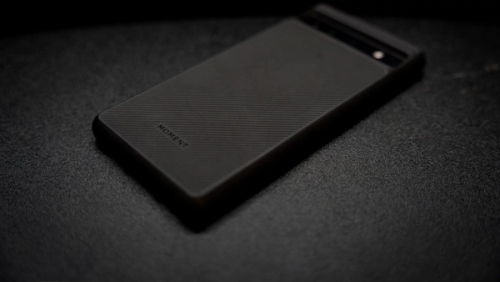
Photo by Itadaki on Unsplash.
Continue reading
The Pixel Fold Leaks Are In, and Google Is Finally Getting Serious About Foldables
Google's next Pixel Fold isn't just a hardware refresh. It's a signal that the company building Android is ready to define what a foldable should actually be.
Samsung's Galaxy S24 Ultra Has a Screen Problem. Samsung's Response Is Making It Worse.
Early S24 Ultra adopters are reporting grainy 'mura' screen defects. Samsung's contradictory responses are turning a hardware issue into a full-blown trust crisis.

Samsung's New AI Playbook: Can Alliances Finally Topple Apple's iPhone?
Samsung is betting that external AI partnerships can outpace Apple's walled garden approach. Here's why the alliance strategy is smarter than it looks.

How to Build a Browser Based AI Agent (Safe-by-Default) [2026]
A practical browser AI agent architecture that stays local: Worker planner, Wasm sandbox, IndexedDB memory, and a service worker tool bridge with real guardrails.

Kunal Ganglani (2026, March 5). The Incredible Shrinking Flagship: Is Peak Big Phone Finally Over?. Kunal Ganglani. Retrieved October 21, 2026, from https://www.kunalganglani.com/blog/compact-flagship-phones-small-phone-trend
Frequently Asked Questions
What does compact phone mean?
A compact phone is a smartphone with a smaller-than-average screen size, typically around 5.9 to 6.2 inches by today's standards — a threshold that would have seemed enormous just a decade ago. The term is relative: what the industry now calls compact was once considered large. The Asus Zenfone 10 at 5.9 inches is one of the last mainstream examples of a genuinely compact high-end phone.
What is a compact flagship phone?
A compact flagship phone is a smartphone that pairs top-tier internal hardware with a smaller physical footprint, usually under 6.2 inches. The Asus Zenfone 10, for example, fits a Snapdragon 8 Gen 2 processor, IP68 rating, wireless charging, and a headphone jack into a 5.9-inch body. These phones offer flagship-level performance without the large form factor most premium phones now require.
What is the smallest flagship phone available?
The Asus Zenfone 10, with its 5.9-inch display, is one of the smallest true flagship phones currently available on the Android side. Apple's smallest current flagship is meaningfully larger following the discontinuation of the 5.4-inch iPhone Mini after the iPhone 13 generation. Finding a genuinely small phone with no hardware compromises has become increasingly difficult as the category shrinks.
Are there any compact flagship smartphones left?
Compact flagship smartphones are nearly extinct, with the Asus Zenfone 10 being one of the last surviving examples in the Android market. Apple discontinued its compact iPhone Mini line after just two generations due to poor sales, replacing it with the larger iPhone Plus. Samsung's smallest current flagship, the Galaxy S24, sits at 6.2 inches, which most industry observers no longer consider truly compact.
What are compact phones and why are they disappearing?
Compact phones are smartphones small enough for comfortable one-handed use, generally under 6.2 inches, but the category is vanishing because engineering trade-offs consistently punish smaller bodies. Less physical space means smaller batteries, worse thermal management for powerful chips, and fewer camera lenses — all features mainstream buyers prioritize. Carriers also rarely stock compact models, leaving them invisible to most consumers despite vocal online demand.
What are the best mini flagship phones?
The Asus Zenfone 10 stands out as the strongest mini flagship phone currently available, earning praise from reviewers including WIRED for its performance, battery life, and compact 5.9-inch design. Apple's iPhone 13 Mini was another benchmark in the category before being discontinued, offering the same processor as the iPhone 13 Pro in a 5.4-inch body. Outside these two, genuinely small phones with uncompromised flagship specs are extremely rare.