Apple's M4 Chip: 38 Trillion Operations Per Second and What It Actually Means for Developers
Apple's M4 isn't just a faster chip. Its 16-core Neural Engine pushing 38 TOPS is a bet that the future of AI is local, not cloud. And I think they're right.


Apple's M4 Chip: 38 Trillion Operations Per Second and What It Actually Means for Developers
38 trillion operations per second. That's the number Apple wants you to remember about the M4 chip. Not the CPU cores, not the GPU benchmarks, not the nanometer process. The Neural Engine number. And honestly? That tells you everything about where Apple thinks computing is headed.
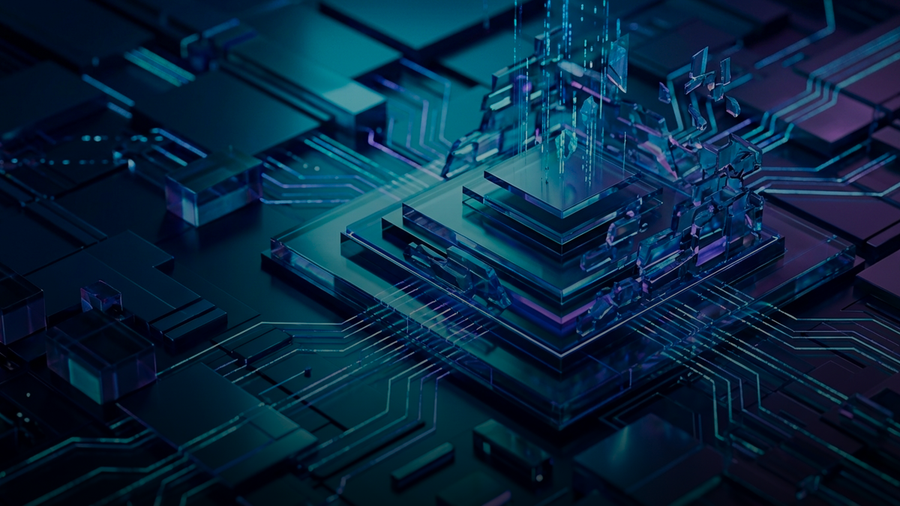
When Apple unveiled the M4, they did something unusual. They launched it in an iPad Pro, not a Mac. They led the keynote not with speed comparisons or export times, but with AI capability. They called it "an outrageously powerful chip for AI." Apple — the company that has historically avoided the term "AI" in marketing — is now building its entire chip story around it.
I've been watching Apple Silicon since the M1 landed in 2020 and blew everyone's expectations apart. The M4 isn't that kind of surprise. It's something more interesting: Apple flat-out telling developers, creatives, and the rest of the industry that on-device AI isn't a nice-to-have. It's the architecture.
What's Actually New Under the Hood
Specs first, because they matter even if Apple's marketing buries them under superlatives.
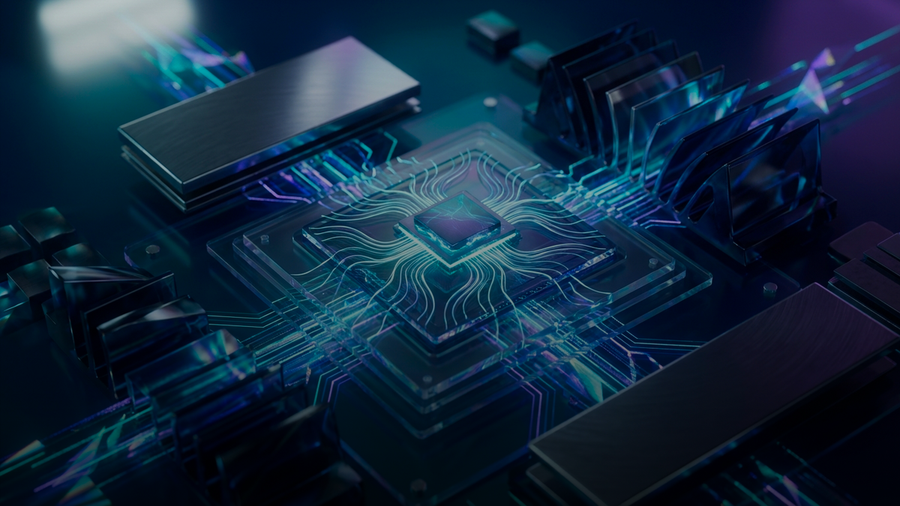
The M4 is built on TSMC's second-generation 3-nanometer process, likely the N3E node. If you're not tracking semiconductor fabrication (fair enough), here's why this matters: N3E is the more manufacturable, cost-effective variant of TSMC's 3nm family. It trades a tiny bit of density for significantly better yields and power efficiency. Apple choosing N3E over first-gen N3 is a pragmatic engineering call. This is one of those things where the boring answer is actually the right one.
The CPU is a 10-core design: 4 performance cores and 6 efficiency cores. Apple claims up to 1.5x the CPU performance of the M2. The more impressive claim is efficiency: the M4 can match the M2's performance at half the power draw. They also threw a shot at the PC world, claiming it matches the latest thin-and-light laptop chips at just a quarter of their power consumption.
The 10-core GPU brings hardware-accelerated ray tracing, mesh shading, and Dynamic Caching to the iPad for the first time. Dynamic Caching is genuinely clever. Instead of statically allocating GPU memory for tasks, it dynamically assigns exactly the amount of local memory each task needs in real time. Less waste, more throughput. For graphics-heavy creative apps, this is a real architectural improvement. Not just a clock speed bump.
But the CPU and GPU story here is evolutionary. Good, expected, incremental. The actual story of the M4 is the Neural Engine.
38 TOPS: The Only Number That Matters
The M4's 16-core Neural Engine delivers 38 trillion operations per second (TOPS). For context: the M1's Neural Engine did 11 TOPS. The M2 did 15.8. Apple claims the M4 is 60x faster than the first Neural Engine in the A11 Bionic from 2017.

That's not a generational improvement. That's Apple building a dedicated AI supercomputer into every device.
Here's the thing nobody's saying about this number: 38 TOPS puts the M4 squarely in competition with dedicated NPUs from Qualcomm and Intel. Chips that are specifically designed for the new wave of "AI PCs." Qualcomm's Snapdragon X Elite ships with a 45 TOPS NPU. Intel's Meteor Lake hits around 10 TOPS on its NPU alone. Apple isn't just keeping up. They're competitive, and they're doing it with a chip that launched in a tablet.
The TOPS number matters because of what it unlocks: running large language models, image generation models, and real-time video processing locally. No round trip to the cloud. Every millisecond of latency you eliminate by running inference on-device is a millisecond that makes your app feel magical instead of laggy. Every API call you skip is a call that doesn't cost money, doesn't leak data, and doesn't fail when the network drops.
The AI race everyone's watching is in the cloud. The one that's going to matter is in the silicon sitting in your hands.
Apple clearly believes this. The M4 is how they're backing it up.
Why iPad First? Read the Signal.
Apple has always launched new chip generations in the Mac first. The M1 debuted in the MacBook Air. The M2, same thing. This time, the M4 showed up in the iPad Pro before any Mac got it.
That's not an accident. I think it tells us three things.
First, Apple sees the iPad Pro as a legitimate pro computing device. Not a big iPhone. Shipping your most advanced silicon in a tablet is a statement that the form factor is ready for real workloads. With 38 TOPS of neural processing and hardware ray tracing, the iPad Pro is now more computationally capable than most developer laptops from two years ago.
Second, Apple wants on-device AI everywhere, not just on desktops. If your cheapest M4 device is an iPad, that sets the floor for what developers can target. When Apple Intelligence rolls out, it needs a minimum hardware bar. The M4 iPad Pro establishes it.
Third, this is Apple getting the developer ecosystem ready. By shipping M4 hardware months before the inevitable M4 MacBook Air and MacBook Pro, Apple gives developers time to optimize. Core ML models, Metal shaders, Neural Engine workloads — all of it needs tuning. The iPad Pro is the testbed.
If you're building apps that touch AI inference, creative tools, or computational photography, the message is clear: start targeting the Neural Engine now. The hardware is ahead of the software ecosystem, and that gap is yours to fill.
What This Means for Local AI Development
I've been running local LLMs on Apple Silicon since the M1 days — llama.cpp first, then Apple's own MLX framework. The experience has gone from "technically possible but painful" to "surprisingly usable" over just a few chip generations. The M4 should push it into "actually good" territory.
Here's why the math works. Running a 7-billion parameter model like Mistral 7B or Llama 2 7B locally requires fast memory bandwidth and efficient matrix multiplication. The M4's unified memory architecture means the Neural Engine, CPU, and GPU all share the same memory pool without copying data between them. Pair that with 38 TOPS on the Neural Engine, and you're looking at practical, real-time inference for models that needed a discrete GPU a year ago.
For developers, this changes the math on a few fronts.
Prototyping gets cheap. You can test and iterate on AI features locally without paying for cloud GPU time. When you're burning through hundreds of inference calls during development, that adds up fast.
Privacy becomes a feature, not a constraint. On-device inference means user data never leaves the device. For health apps, financial tools, anything handling sensitive information — this isn't just nice. It's a regulatory advantage.
Latency-sensitive features actually work. Real-time transcription, live camera effects, intelligent autocomplete. These are defined by response time. On-device beats cloud, every time.
If you’re thinking about how different GPUs behave for local inference, I ran a reproducible harness across Intel’s newer cards in Intel Arc B‑Series Local LLM Benchmark [2026]: Arc Done Right, with TTFT, tok/s, VRAM, and power numbers you can compare against your on-device targets.
Once you start leaning on on-device models for things like transcription and autocomplete, you quickly run into the next problem: how to keep quality stable as prompts, tools, and retrieval logic evolve. I dug into that in AI Engineering Evals: Regression Gates for Prompts, Tools, RAG [2026], with a practical way to treat evals like CI for AI features.
This is also where AI coding assistants start to drift: once the codebase gets big, they’ll repeat the same mistakes unless you give them durable, repo-local memory. I dug into a practical system for that in How to Prevent AI Coding Assistant Repeating Mistakes [2026].
And then there's offline capability. Your AI features work on a plane, in a subway, in rural areas with no signal. Cloud dependency is a product limitation disguised as an architecture choice. Stop treating it as a default.
Apple's MLX framework is still young, but it's maturing fast. It's designed specifically for Apple Silicon's unified memory, and the M4's Neural Engine gives it substantially more headroom. I think the gap between "what you can run locally on Apple Silicon" and "what requires a cloud API" is going to shrink dramatically over the next 12 months.
The Creative Workflow Angle
The M4 isn't just a developer story. For creatives working in video, 3D, and design, the combination of GPU improvements and Neural Engine power opens up workflows that were previously Mac Pro territory.
Hardware-accelerated ray tracing on an iPad means tools like Blender, Cinema 4D, and game engines can render realistic lighting in real time on a device you carry in a backpack. Mesh shading means more complex geometry without proportional performance hits. Dynamic Caching means your GPU memory isn't wasted on allocated-but-unused buffers.
But the bigger creative story is AI-assisted workflows. Real-time background removal in video editing. Intelligent object selection in design tools. AI-powered audio cleanup. Generative fill. These are all Neural Engine workloads. All of them get dramatically better at 38 TOPS compared to the 15.8 they had on M2.
Adobe, DaVinci Resolve, Procreate — they're already optimizing for Core ML and the Neural Engine. The M4 gives them enough headroom to ship AI features that feel instant rather than "please wait while we process."
The Bet Apple Is Making
Apple is making a very specific bet with the M4: that the next wave of computing isn't about raw clock speeds or core counts. It's about dedicated AI silicon that's fast enough to make cloud inference optional for most consumer and pro workloads.
This is a bet against the current model where every AI feature phones home to a GPU cluster. It's a bet that users will choose privacy and speed over raw capability when the local silicon is good enough. And it's a bet that developers will build for on-device AI if Apple gives them the hardware.
I think they're right. Not because Apple is always right. But because the economics and physics both point the same direction. Cloud inference is expensive, latent, and privacy-hostile. Local inference is getting cheaper, faster, and more capable with every generation. The M4's 38 TOPS is a waypoint. The M4 Pro and M4 Max will push further.
If you're building anything that touches machine learning, now is the time to learn Core ML and MLX. Seriously. If you're a creative professional, the M4 iPad Pro is the first tablet that genuinely earns the "Pro" label for AI-heavy workflows. And if you're watching from the sidelines, start paying attention to that TOPS number in every chip announcement from here on out. It's going to matter more than GHz within five years.
The cloud AI race gets all the headlines. The on-device AI race is the one that's going to reshape what software actually feels like to use.
Continue reading

DJI Osmo Pocket 3 for Technical Content Creators: A Developer's Honest Review [2026]
Every review covers the Osmo Pocket 3 for vlogging. None of them tell you whether it can actually film legible code on a monitor, capture a circuit board demo, or survive a one-person tutorial setup.
The MacBook Neo's Secret Weapon Isn't Its Price. It's the iPhone Chip Inside.
Apple's rumored budget MacBook won't use an M-series chip. It'll use a binned iPhone chip. That's not a compromise — it's the whole strategy.

The M5 MacBook Air Is Great. But Apple Still Won't Build the Mac Everyone Actually Needs.
Apple's M5 MacBook Air is a beast. But starting at $1,099, it ignores the massive market of developers and students who need a capable Mac under $800.

Apple's Rumored Budget MacBook: Spiritual Successor to the iBook or a Crippled Air?
Apple reportedly wants a cheap MacBook to crush Chromebooks in education. But can a company allergic to 'budget' actually build one worth buying?

Kunal Ganglani (2026, March 3). Apple's M4 Chip: 38 Trillion Operations Per Second and What It Actually Means for Developers. Kunal Ganglani. Retrieved October 23, 2026, from https://www.kunalganglani.com/blog/apple-m4-chip-what-it-means-for-developers
Frequently Asked Questions
What is Apple's M4 chip with 38 trillion operations per second Neural Engine?
Apple's M4 chip features a 16-core Neural Engine capable of 38 trillion operations per second (TOPS), making it Apple's most powerful on-device AI processor to date. This represents a dramatic leap from the M1's 11 TOPS and the M2's 15.8 TOPS, and puts the M4 in direct competition with dedicated AI chips from Qualcomm and Intel. Apple debuted the M4 in the iPad Pro, signaling that on-device AI is central to its entire product line.
What does Apple M4 38 TOPS mean for the Neural Engine?
38 TOPS means the M4's Neural Engine can perform 38 trillion AI-related calculations every second, enabling complex tasks like local image generation, real-time language processing, and on-device inference without sending data to a cloud server. This figure puts Apple's chip near Qualcomm's Snapdragon X Elite at 45 TOPS and well ahead of Intel's Meteor Lake NPU at around 10 TOPS. The higher the TOPS, the more powerful and private the AI features available directly on your device.
What is the Apple M4 chip 38 TOPS Neural Engine official specification?
Officially, Apple's M4 chip includes a 16-core Neural Engine rated at 38 TOPS, built on TSMC's second-generation 3-nanometer process. Apple describes it as capable of running demanding AI workloads entirely on-device, and claims it is 60x faster than the original Neural Engine found in the 2017 A11 Bionic chip. This specification was announced alongside the M4's debut in the iPad Pro.
How fast is the Apple M4 38 trillion operations per second Neural Engine compared to previous chips?
The M4's 38 TOPS Neural Engine is more than twice as fast as the M2's 15.8 TOPS and nearly three and a half times faster than the M1's 11 TOPS. Apple also claims it is 60x faster than the first Neural Engine in the A11 Bionic from 2017. That generational progression reflects Apple's deliberate shift toward making on-device AI processing the centerpiece of its chip architecture.
Where can I find the official Apple M4 38 TOPS Neural Engine announcement?
Apple's official M4 chip announcement, including the 38 TOPS Neural Engine specification, was published on the Apple Newsroom alongside the iPad Pro launch. The announcement positioned the M4 as 'an outrageously powerful chip for AI,' marking a notable shift in how Apple publicly frames its silicon around AI capability. All technical claims about TOPS performance, power efficiency, and CPU cores originate from that official Apple source.
Does the Apple M4 chip introduce a 38 TOPS Neural Engine for the first time in an iPad?
Yes, the M4 marks the first time Apple has shipped a 38 TOPS Neural Engine in an iPad, debuting in the iPad Pro rather than a Mac as Apple typically does with new chip generations. This was a deliberate signal that serious AI hardware belongs across Apple's entire product line, not just high-end computers. It also sets the minimum hardware floor developers can target as Apple Intelligence features roll out.